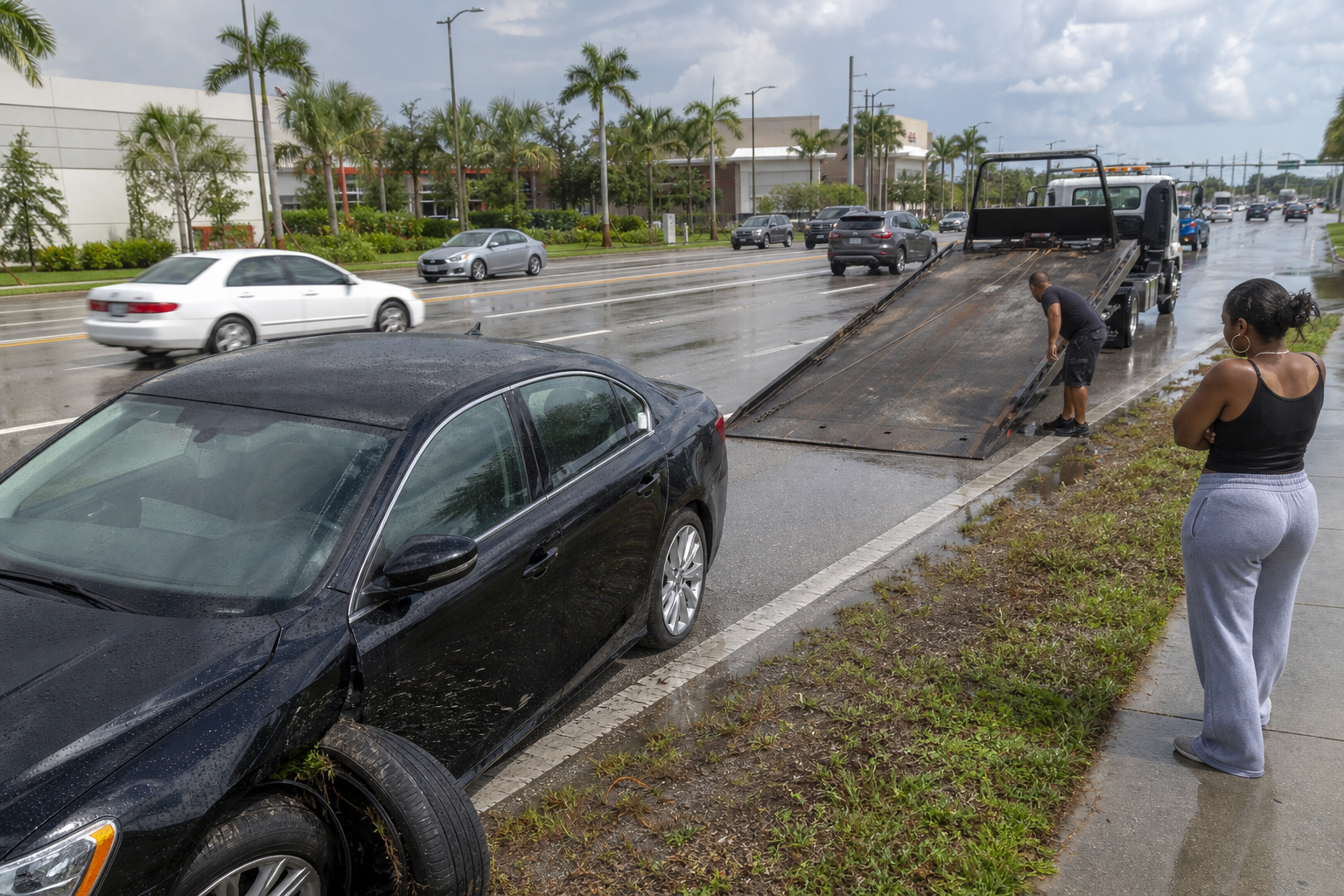
A hard West Palm Beach rain can reduce roadside visibility within moments. If your vehicle has just struck a curb, dropped into a deep road defect, or begun pulling sharply, that poor visibility changes the first decision: do not stand beside traffic to inspect the damage, and do not drive simply to escape an uncomfortable shoulder.
A realistic tow-or-drive scenario
Suppose the impact did not stop the engine, but the steering wheel now sits off-center and the front of the vehicle vibrates. There is no dramatic smoke, and the car may still move when you press the accelerator. That does not mean it is fit to drive.
A damaged tire can lose pressure suddenly. A bent wheel or steering component can make the vehicle difficult to control. Parts beneath the vehicle may also be touching the road even if the body looks mostly intact. Continuing for “just a few miles” can turn a towable vehicle into one with additional damage.
The decision should be based on control, braking, fluid loss, warning signs, and tire condition—not on whether the engine starts.
What to do in the first few minutes
Immediate action
- Ease off the accelerator and avoid abrupt steering or braking.
- If the vehicle remains controllable, move only far enough to reach the nearest practical position out of active traffic.
- Turn on the hazard flashers and make the vehicle as visible as possible.
- Do not inspect the traffic-facing side unless you can do so without entering or leaning toward a travel lane.
- Shut the vehicle off if you see smoke, smell fuel, notice rapid fluid loss, or receive an overheating or oil-pressure warning.
If the vehicle cannot be moved without grinding, scraping, severe shaking, or uncertain braking, leave it where it is rather than forcing it farther. If there is fire, an injury, or an immediate threat of being struck, contact emergency services first.
Use this checklist before deciding to drive
A vehicle should generally be towed when any item below is present or cannot be checked from a protected position:
- Steering has changed: The wheel is off-center, unusually heavy, loose, or unable to hold a straight path.
- Braking feels different: The pedal sinks, feels unusually hard, produces grinding, or does not slow the vehicle predictably.
- A tire or wheel is compromised: The tire is flat, the sidewall is cut or bulging, the wheel is bent, or the tire rubs against the body.
- Fluid is escaping: A growing puddle, steady drip, fuel odor, or spray beneath the vehicle calls for a tow.
- Critical warnings stay on: Oil-pressure, overheating, brake-system, or charging warnings should not be ignored merely because the engine continues running.
- Something is dragging: Loose body panels, exhaust parts, splash shields, or suspension pieces can catch the road or separate in traffic.
- Visibility is obstructed: A damaged hood, shattered windshield, deployed airbag, or failed exterior lighting can make driving unsafe.
- The vehicle behaves abnormally: Severe vibration, clunking, smoke, burning odor, loss of power, or repeated stalling warrants professional transport.
Driving may be reasonable only when the issue has been fully resolved, the tires hold proper pressure, no fluid is leaking, no critical warning remains, and steering and braking feel completely normal. Do not use a busy roadside as a test area. If you cannot verify those conditions without entering traffic, choose a tow.
Let traffic exposure guide the response
The same mechanical problem can require a different response depending on where the vehicle stops. A wide parking area offers room to observe a tire or check beneath the vehicle. A narrow roadside position with fast-moving traffic does not.
In West Palm Beach, glare, rain, darkness, and spray from passing vehicles can make a stopped car or a person beside it harder to see. Stay on the side away from traffic when possible. Do not crouch near a wheel facing an open lane, and do not place yourself between the disabled vehicle and approaching traffic.
If remaining inside is the least exposed option, keep your seat belt fastened. If the location presents an immediate collision risk and there is a clearly safer place you can reach without crossing active lanes, move away from the vehicle. Conditions vary, so prioritize separation from moving traffic over inspecting the car.
Prepare the location and access details
A towing dispatcher needs more than a street name. Before calling, gather the details that help the driver find and load the vehicle without unnecessary roadside delays:
- Your precise location and the direction the vehicle was traveling
- Whether the vehicle is in a traffic lane, shoulder, parking lot, driveway, or covered structure
- Nearby entrances or access restrictions visible from your position
- The vehicle’s make, model, color, and approximate size
- Which wheels are damaged, locked, turned, or unable to roll
- Whether the vehicle starts, shifts into neutral, and has accessible keys
- Any low clearance, tight turning area, mud, standing water, or loading obstruction
- The symptoms that caused you to stop
Do not attempt to straighten a damaged wheel, crawl underneath the vehicle, or push it while exposed to traffic. Tell the dispatcher if the vehicle has very low ground clearance, extensive wheel damage, or parts hanging underneath. Those details can affect loading equipment and approach.
Choosing the right service handoff
Request emergency towing when the vehicle is disabled in an exposed position, cannot be controlled normally, or shows a critical warning. Explain the traffic conditions first, followed by the mechanical symptoms.
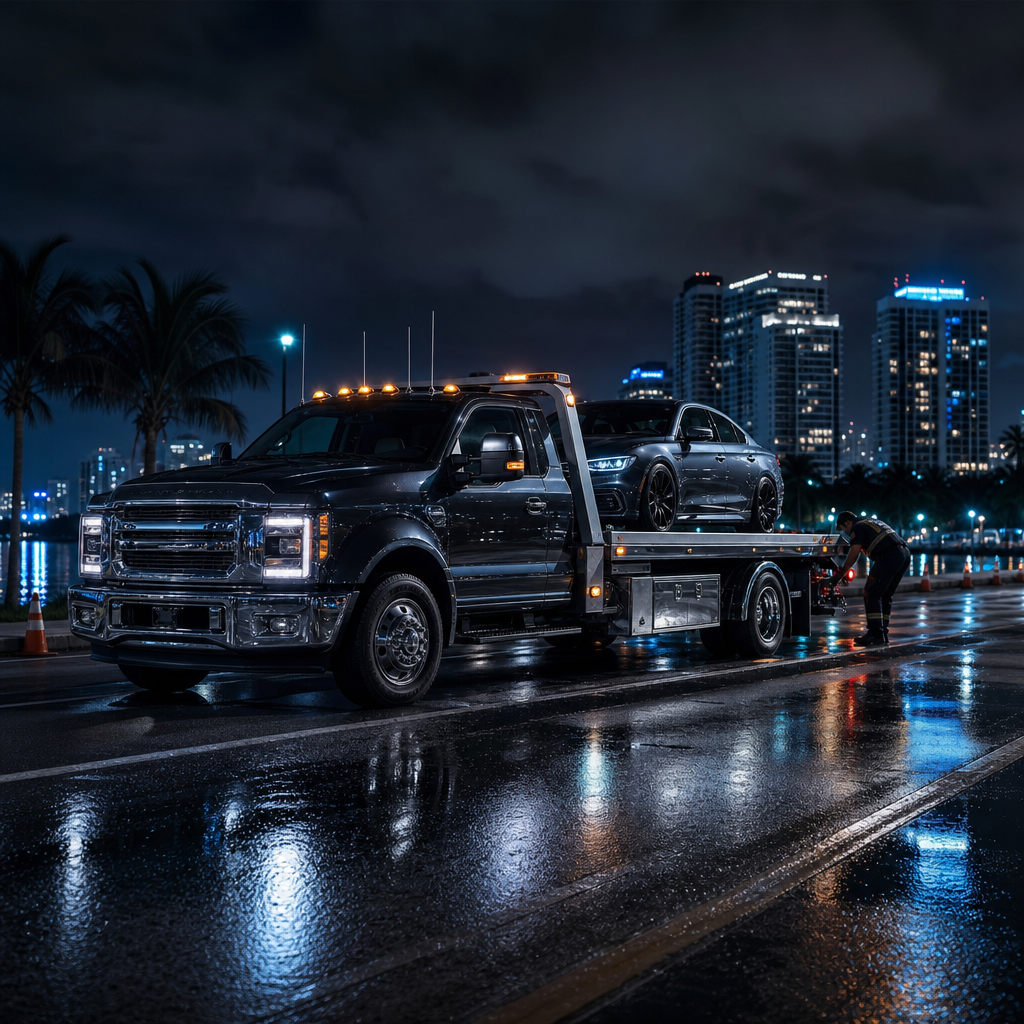
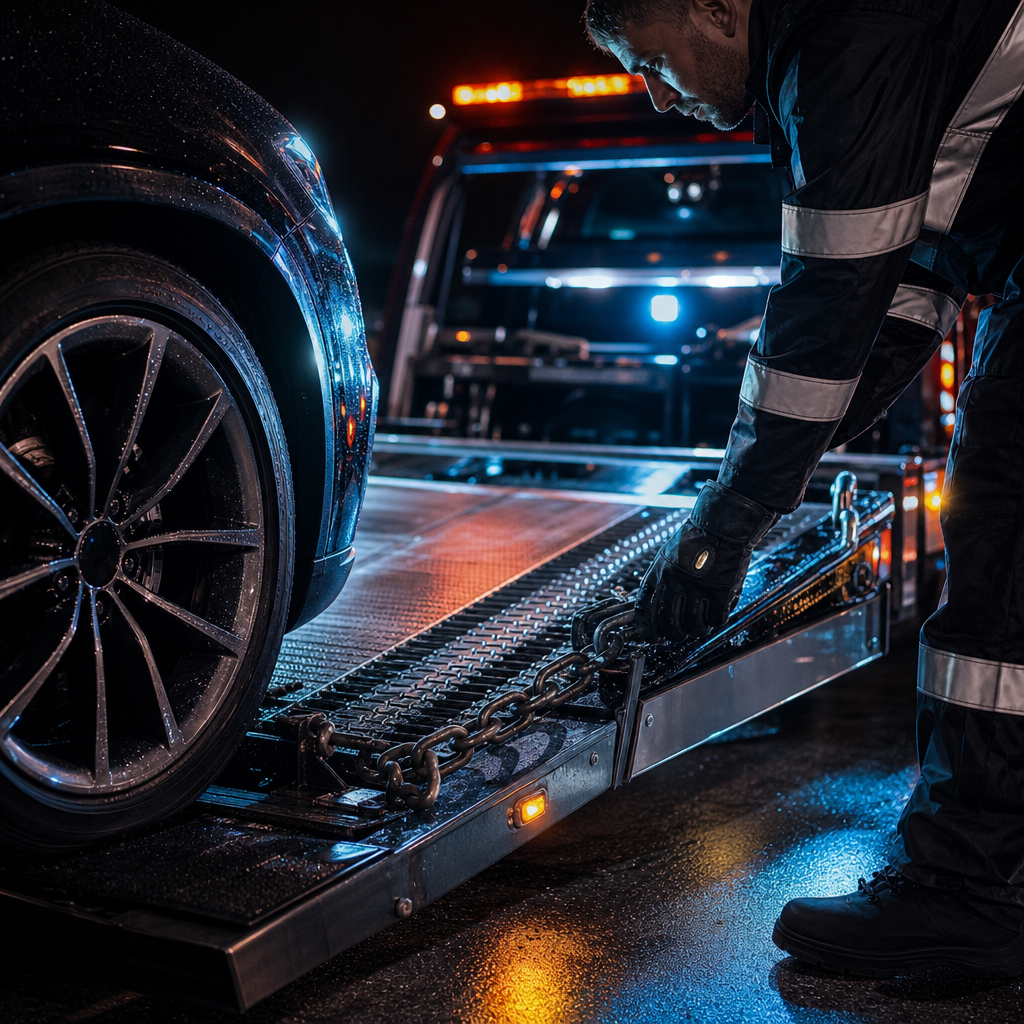
A flatbed tow is often the appropriate handoff when a vehicle has collision damage, damaged wheels, steering trouble, low clearance, or a condition that makes rolling contact undesirable. The towing provider can determine the loading method after hearing the vehicle details and assessing access.
If the problem occurs outside normal business hours, contact 24-hour towing in West Palm Beach rather than trying to drive a questionable vehicle until another facility opens. Provide a reachable phone number and stay available for instructions about meeting the tow operator.
You do not need to diagnose the failed part before calling. A calm description—“the steering changed after an impact,” “the brake pedal feels soft,” or “fluid is collecting under the front”—is more useful than guessing. If the car no longer feels predictable, leave the driving to the tow.
Frequently asked questions
Can I drive a short distance on a flat tire?
Driving on a flat can damage the wheel and reduce control. Stop in the nearest practical position away from traffic and arrange roadside help or towing. Do not continue merely because the destination is close.
Should I tow the vehicle if a warning light appears but it still runs?
It depends on the warning. Oil-pressure, overheating, brake-system, and charging warnings can indicate conditions that worsen quickly. Stop, shut the vehicle off when appropriate, and arrange a tow if the warning remains or the vehicle behaves abnormally.
What if the vehicle only shakes at higher speeds?
Do not accelerate again to reproduce the symptom. Shaking can involve a tire, wheel, steering, or driveline problem. If the cause is unknown, have the vehicle towed rather than testing it in traffic.
Can roadside assistance solve the problem without towing?
A clearly identified, safely accessible issue may be handled at the roadside. If there is steering, braking, wheel, collision, fluid-loss, or overheating damage—or the location is too exposed for roadside work—towing is the safer handoff.
What should I say when I call for a tow?
Give your exact location, direction of travel, vehicle description, roadside position, visible damage, warning lights, and whether the wheels can roll. Mention traffic exposure or limited access at the beginning of the call.