
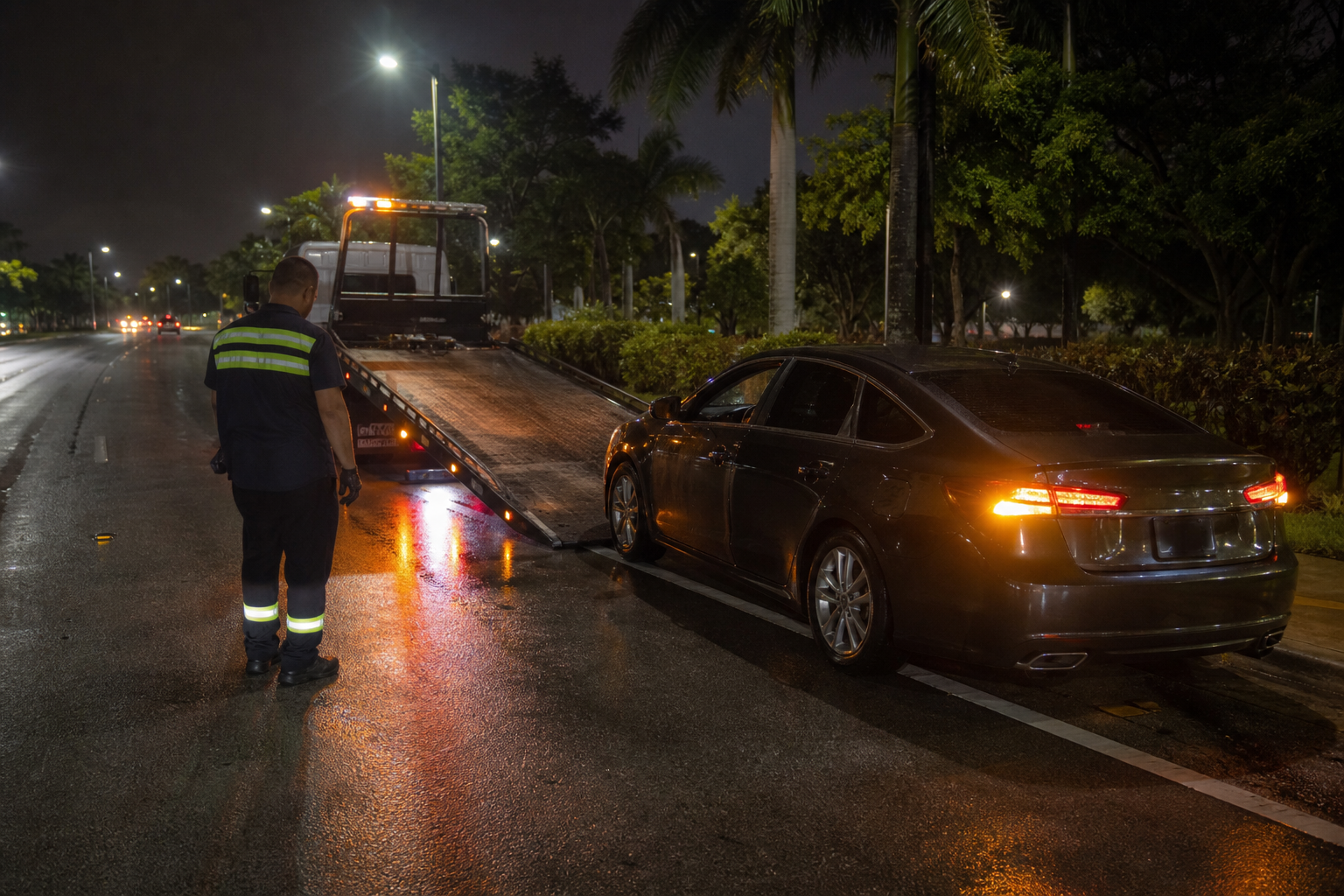
24-Hour Towing in West Palm Beach After Dark
A hard South Florida rain after dark can hide lane edges, reduce driver visibility, and make a disabled vehicle harder to describe. Start by making yourself visible without stepping into traffic. Then share a precise vehicle location, pickup point, destination, and any access limits when you request a tow.
The first 10 minutes
Minutes 0–2: control the vehicle
Ease off the travel path instead of making a sudden turn. Choose a firm, visible stopping area. Set the parking brake and switch on the hazard lights. Do not keep driving on a damaged tire, a wheel that will not turn correctly, or a vehicle showing smoke or fire.
If the vehicle is stuck in an active lane and cannot move, keep your seat belt on unless staying inside creates a greater danger. Call emergency services for an immediate traffic hazard, fire, smoke, injuries, or another life-safety threat. Towing can be arranged after the urgent hazard is reported.
Minutes 2–5: decide where to wait
Look before opening any door. If traffic is passing close to the vehicle, remaining belted inside may be safer. If you can reach a protected place without crossing moving lanes, exit from the side away from traffic. Never stand in front of or behind the disabled vehicle, and do not wait between it and another vehicle.
Rain changes this decision. Drivers may not see you until they are close, and standing water can hide pavement edges or holes. Do not enter floodwater to inspect the vehicle or reach another location.
Minutes 5–10: build a usable location description
Open your map and note the displayed street or property name. Add the direction the vehicle was traveling, the side of the roadway, and the nearest visible sign, building entrance, or address. A dropped map pin helps, but it should not replace a written description.
If you are inside a parking garage, report the garage name or address, level, row or section marker, nearest elevator or entrance, and posted height clearance. State whether a gate, ticket, attendant, tight turn, or low ceiling may affect tow-truck access.
Decision points before you request help
Can the vehicle reach a safer pickup point?
Move only if steering, brakes, wheels, and visibility allow it. Do not force a vehicle with collision damage, fluid loss, severe tire damage, or a wheel that appears out of position. Tell dispatch that the vehicle cannot move so the loading plan starts with that limitation.
Is this a roadside tow or an urgent hazard?
Request 24-hour towing when the vehicle is safely out of moving traffic but cannot continue. Use emergency towing assistance when the disabled vehicle creates an urgent roadside access or exposure problem. Contact emergency services first for injuries, fire, smoke, or immediate danger to road users.
Does the vehicle need a flatbed?
Ask about flatbed towing when the vehicle has severe wheel or tire damage, low clearance, all-wheel drive requirements, or damage that makes rolling questionable. Share the vehicle year, make, model, and visible condition. Dispatch can use those details to determine the appropriate equipment.
Is access restricted?
Airport property, gated lots, garages, and private access points can complicate the pickup. Report the exact zone, level, entrance, clearance, and gate procedure. If an attendant controls access, ask where the tow vehicle can enter and where you should meet it. Do not relocate to an unauthorized or unsafe pickup area just to simplify the request.
What to report when you call
Give information in this order so the request can be understood quickly:
- Vehicle: Year, make, model, color, and body type.
- Vehicle location: Address or map pin plus roadway side, travel direction, garage level, or property entrance.
- Condition: Whether it starts, steers, rolls, brakes, or has damaged wheels.
- Pickup point: Shoulder, parking space, garage bay, gated lot, or another specific position.
- Access: Low clearance, locked gate, narrow aisle, standing water, or heavy passing traffic.
- Destination: The address where the vehicle should be taken.
- Waiting contact: Your name, callback number, and where you will wait safely.
Before ending the request, repeat the pickup point and destination. Keep your phone charged and audible. If you move to a safer waiting place, update the towing provider rather than making the driver search for you.
What towing help does next
Dispatch uses your vehicle details, location, condition, and access notes to select an appropriate tow setup. A standard tow may fit a vehicle that rolls and has ordinary access. A flatbed may be considered when wheel damage, drivetrain needs, low clearance, or vehicle condition makes it the better loading choice.
The driver still needs a clear path to the vehicle. Remove loose personal items you need, keep the keys available, and be ready to identify the destination. Do not attempt to push the vehicle, guide traffic, crawl beneath it, or connect towing equipment yourself.
When the truck approaches, remain in your safe waiting place until the operator tells you where to stand. Wet pavement and moving equipment create additional hazards after dark.
Night breakdown checklist
- Hazard lights are on.
- The vehicle is out of moving traffic if it can be moved safely.
- No one is standing beside or behind the vehicle.
- The map pin and written location agree.
- Garage level, clearance, gate, or airport access details are ready.
- Vehicle condition and wheel damage are reported.
- A pickup point and destination are confirmed.
- The phone is charged, audible, and available for callbacks.
Nighttime towing FAQs
What if I cannot identify the exact address?
Send a map pin, then describe the roadway side, direction of travel, nearest visible address or entrance, and vehicle color. In a garage, include the level and row or section marker.
Should I wait inside the vehicle?
Stay belted inside when exiting would place you close to moving traffic. Leave only if you can reach a protected area safely or if fire, smoke, rising water, or another immediate threat makes the vehicle unsafe.
What should I report about the destination?
Provide the full destination address and confirm that the location can receive the vehicle at that time. If you have not chosen a destination, say so during the request rather than giving an incomplete address.
How do I know if I need a flatbed?
Report the drivetrain if known, ground clearance, wheel condition, and whether the vehicle rolls. Ask for a flatbed when damage or vehicle requirements make rolling or conventional towing questionable.
What if South Florida heat makes waiting inside uncomfortable?
If the engine must remain off and the cabin becomes unsafe, move to a protected, ventilated waiting place only when you can get there without entering traffic or standing water. Tell dispatch where you moved. Never leave a child or pet in a hot vehicle.
Choose the next step
If the vehicle is safely parked but cannot continue, request a tow and share the vehicle location, condition, pickup point, and destination. If damaged wheels, low clearance, or drivetrain needs affect loading, request a flatbed review. If the vehicle is blocking traffic or there is fire, injury, smoke, or immediate danger, contact emergency services first.