Quick answer: get out of the traffic path, avoid water, and make your location tow-ready
If your vehicle becomes disabled during hurricane-season weather in West Palm Beach, move it to a stable, visible place only if you can do so without entering floodwater or crossing debris. Stop as far from moving traffic as practical, switch on the hazard lights, stay clear of downed lines, and contact emergency services if anyone faces immediate danger. For towing, be ready to give the dispatcher an exact location, the vehicle’s condition, nearby hazards, and any gate, garage, surface, or clearance issue that could affect access.
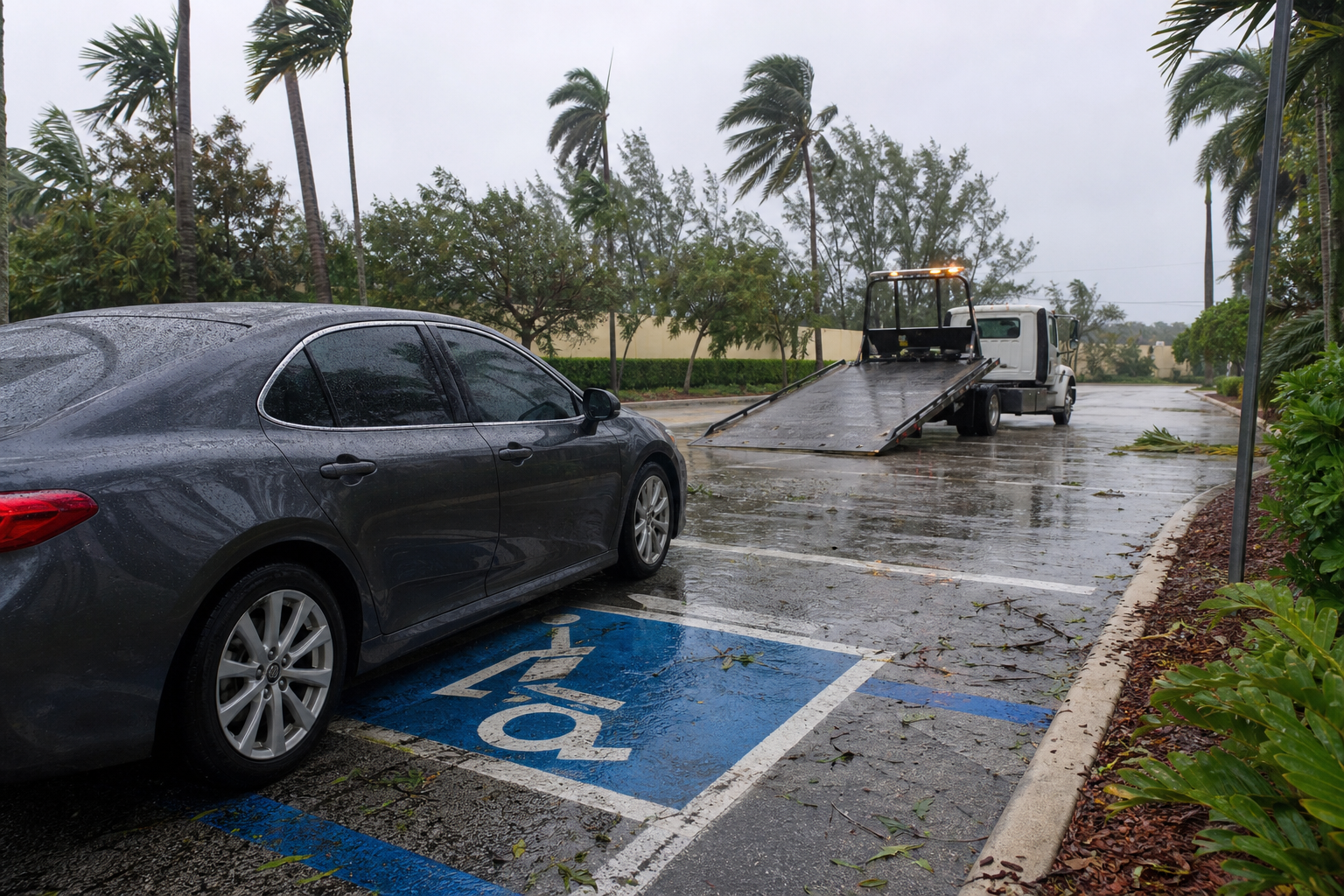
Storm conditions can change the type of help that is practical. A standard tow may be possible from a clear, firm surface, while a vehicle with water exposure, wheel damage, or limited rolling ability may need flatbed towing. Give accurate details rather than trying to choose the equipment yourself.
Storm-disabled vehicle: do this, not that
| Do | Don’t |
|---|---|
| Use a visible address, property name, cross street, or phone map pin to confirm where you are. | Describe the location only as “somewhere in West Palm Beach” or rely on a vague landmark. |
| Tell the dispatcher about standing water, branches, soft ground, blocked entrances, gates, ramps, or low overhead clearance. | Assume a tow truck can enter because a passenger car reached the same spot earlier. |
| Wait in a location protected from traffic and weather when one is safely available. | Stand between the disabled vehicle and approaching traffic or remain beside the travel lane. |
| Report whether the vehicle starts, steers, rolls, and has accessible wheels. | Repeatedly try to start a vehicle that stalled in water or conceal known access problems. |
| Follow official emergency instructions and contact emergency services for immediate threats. | Use a towing request as a substitute for rescue from rising water, fire, or electrical danger. |
Scenario playbook: from breakdown to safe tow
- Decide whether the vehicle can be moved safely. If it still operates and the route to a nearby stable area is visibly clear, move out of the traffic path. Do not cross standing or moving water, drive over branches, or pass beneath a downed line. If moving the car would increase risk, leave it where it is and focus on getting occupants to a safer position.
- Check the immediate hazard before calling. Look for rising water, poor visibility, unstable trees or branches, electrical lines, smoke, and passing traffic. Do this from a protected position; do not walk into water to inspect its depth. Call emergency services first if there is an immediate threat to life or no safe place to wait.
- Pinpoint the vehicle, not just yourself. Open your phone’s map and confirm the pin is on the disabled vehicle. Note the visible street address, nearest intersection, entrance, parking section, floor, or space number when available. If you moved to shelter nearby, tell the dispatcher that you are not currently standing with the car.
- Describe how a tow truck can reach it. State whether the vehicle is on pavement, gravel, grass, a shoulder, a driveway, or inside a garage. Mention gates, access codes, tight turns, low ceilings, steep ramps, pooled water, debris, or a blocked entrance. If the first approach is unusable, identify another entrance only if you have personally confirmed that it is open and safe.
- Give a concise vehicle condition report. Provide the vehicle’s color, make, model, and approximate year, followed by what happened: stalled in water, would not start after parking, struck debris, has a damaged wheel, or is otherwise unable to move. Tell the dispatcher whether it can shift into neutral, whether the steering works, and whether any wheels appear blocked or damaged. Do not crawl under the vehicle to investigate.
- Request the appropriate towing help. For a breakdown with no immediate danger, 24-hour towing assistance can help move the vehicle from an accessible location. Use emergency towing when the disabled vehicle creates an urgent roadside hazard but no active rescue is required. Explain water exposure or limited wheel movement so the dispatcher can assess whether a flatbed is suitable.
- Stay reachable and preserve access. Keep your phone on, allow calls from the towing provider, and conserve battery. Do not lock the only usable key inside the vehicle. If a gate attendant, property representative, or access code is needed, arrange that before the truck arrives when possible.
- Recheck conditions before the truck enters. Tell the dispatcher if water rises, debris shifts, an entrance closes, or you relocate. A pickup plan based on outdated access details can send the truck to the wrong side of the property or toward an unsafe approach.
Pack a storm roadside grab kit
- Charged phone, vehicle charger, and power bank
- Flashlight with spare batteries
- Reflective vest or other high-visibility item
- Drinking water and essential personal medication
- Rain protection and sturdy closed-toe shoes
- Vehicle identification, insurance details, and towing contact information
- Paper card listing an emergency contact and key vehicle details
- Small towel or waterproof pouch for the phone and documents
Keep the kit where it can be reached without opening a trunk positioned near traffic. Before forecast storm conditions arrive, charge devices and place the vehicle key where the driver can retrieve it quickly.
When to call for help
Request towing when the vehicle cannot be driven safely, has stalled after contact with water, has wheel or underbody damage from debris, or is blocking a usable access path. Call emergency services instead when occupants are trapped, water is rising around the vehicle, a power line is nearby, there is fire or smoke, or remaining at the scene presents an immediate threat.
Tow-truck access may need to wait if active weather, flooding, debris, or site restrictions make entry unsafe. Do not attempt to guide a truck through water or clear heavy debris yourself.
Have this information ready when you call
- Exact vehicle location and a map pin
- Vehicle color, make, model, and approximate year
- What caused the vehicle to stop or become unsafe to drive
- Whether it starts, steers, shifts, and rolls
- Any water exposure or visible wheel damage
- Surface type, entrance instructions, gate details, and overhead limits
- Current hazards and the safest confirmed approach
- Your callback number and where you will wait
Information-ready call to action: Once you are in a safe place, call with the location pin, vehicle condition, and access notes ready. Those details help the dispatcher evaluate the towing setup without relying on guesses during changing West Palm Beach weather.
Hurricane-season towing FAQs
Should I stay inside a disabled vehicle during heavy rain?
Base the decision on the immediate surroundings. A vehicle away from traffic, rising water, trees, and electrical hazards may provide temporary shelter. If the position is dangerous, move to a safer place only when you can reach it without entering water or crossing traffic. Contact emergency services for an immediate threat.
Can a tow truck pick up a car from standing water?
Access depends on water conditions, the surface below it, and the vehicle’s position. Do not enter the water to measure it or encourage a driver to proceed. Report what you can see from a safe location and let the towing provider determine whether access must wait.
What if my car stalled after driving into water?
Do not keep trying to restart it. Move away from rising water if you can do so safely, then report the water exposure to the dispatcher. Include whether water entered the passenger area and whether the vehicle can roll; these details can affect the towing approach.
How do I help a tow truck find me if signs are hard to see?
Send or read out a phone map pin, confirm a visible address or intersection, describe the entrance, and provide the vehicle’s color and position. Stay available by phone. Avoid standing in the roadway or using hand signals from an exposed location.
Should I request a flatbed after storm debris damages a wheel?
Tell the dispatcher which wheel appears affected, whether it turns, and whether the car can roll. A flatbed may be appropriate, but equipment selection should be based on the vehicle’s condition and the pickup area’s access rather than the driver’s assumption.