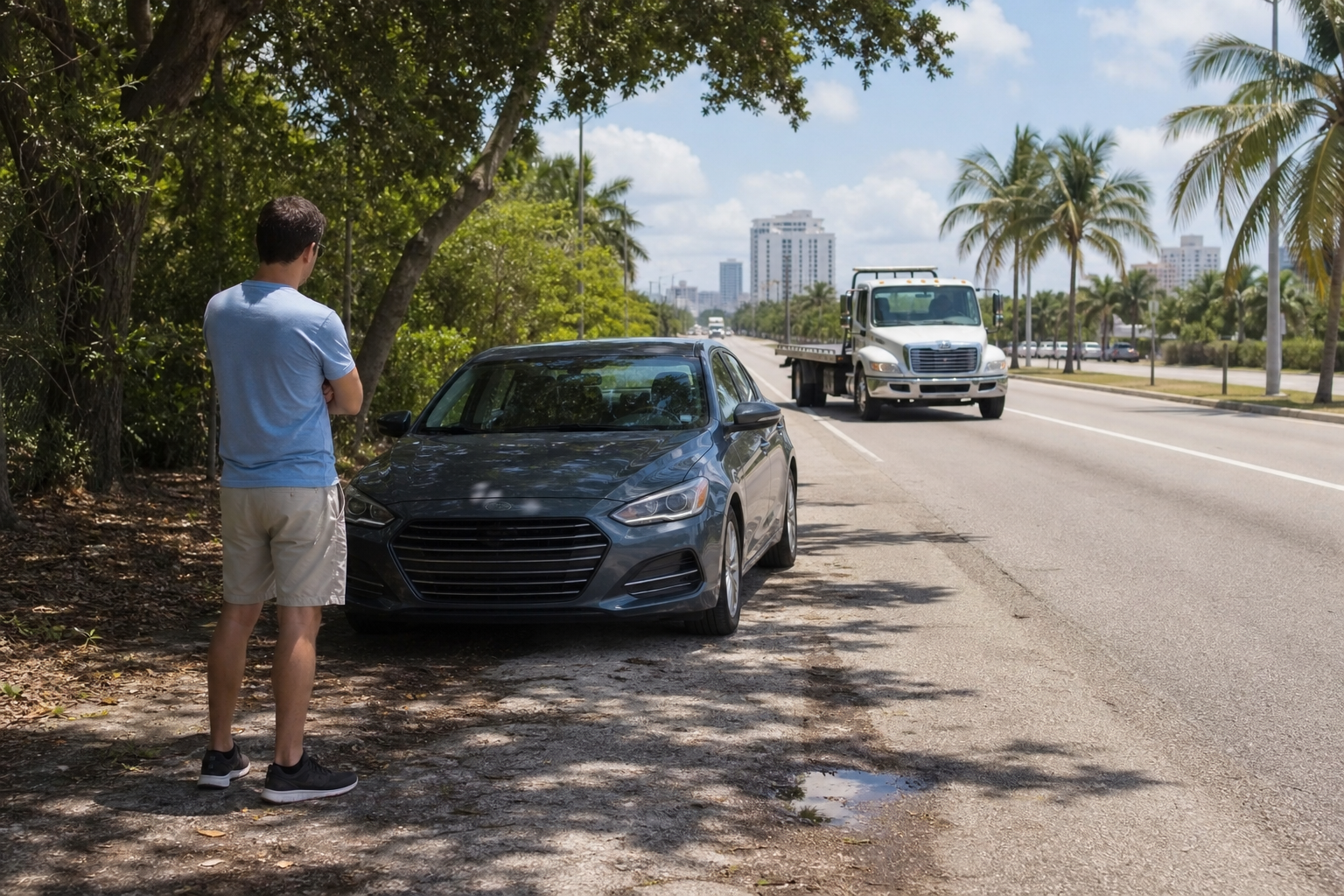
The highest-risk heat mistake is trying to drive “just a few more miles” after a temperature warning, steam, or a strong burning smell appears. The safer move is to get out of moving traffic at the first safe opportunity, turn off the engine, and arrange help before a manageable problem becomes a stranded-vehicle situation.
Florida heat adds stress to cooling systems, batteries, tires, fluids, and electronics. In West Palm Beach, a vehicle can sit in intense sun, idle in slow traffic, then face hot pavement and heavy air-conditioning demand in the same trip. This guide is built for the moment a warning light comes on or your vehicle begins acting differently—not for diagnosing or repairing the vehicle at the roadside.
Immediate action: do this first
- Do move to a safe, visible place if the vehicle is still moving normally and can be moved without risk.
- Do turn on hazard flashers once you are stopped.
- Do not open a hot radiator or coolant cap, even if you see steam.
- Do not keep driving with a red temperature warning, loss of power, smoke, or a tire that feels unstable.
- Do call for towing if the vehicle is unsafe to drive or you cannot identify a clearly safe next step.
Heat symptom matrix: what to do and what not to do
| What you notice | Likely roadside risk | Do | Do not |
|---|---|---|---|
| Temperature gauge climbing, temperature warning, or steam from the front of the vehicle | Overheating can escalate quickly and may lead to loss of power or further vehicle damage. | Pull over safely, turn off the engine, keep clear of traffic, and allow the vehicle to cool without opening the cooling system. | Do not remove the radiator or coolant cap. Do not continue driving to “see if it comes down.” |
| Battery warning light, slow starting, dim displays, or repeated clicking when starting | Heat can worsen battery weakness and electrical-system trouble. A vehicle may stop restarting after it is parked. | Park in a safe place if possible. Note any warning lights and request roadside help or towing if the vehicle will not start reliably. | Do not repeatedly attempt to start the engine until the battery is drained. |
| Tire-pressure warning, vibration, thumping, pulling, or a visibly soft tire | Hot pavement and heat-stressed tires can make a low-pressure condition less stable. | Slow down smoothly, avoid sudden steering, and stop in a protected location. Request assistance if the tire is flat, damaged, or unsafe. | Do not drive on a visibly flat tire or attempt to reach a distant destination at highway speed. |
| Air conditioning suddenly blows warm while the temperature gauge rises | This combination can point to a cooling-system problem or an engine working beyond a safe range. | Treat the temperature warning as the priority. Stop as soon as safely possible and let the engine remain off. | Do not rely on the air conditioning returning as proof that the vehicle is safe to drive. |
| Burning odor, smoke, fluid dripping, or a sharp chemical smell | Heat can make leaks and overheated components more noticeable. Smoke creates an immediate safety concern. | Stop, shut off the engine, move occupants away from the vehicle and traffic when safe, and call for help. | Do not inspect underneath the vehicle or touch leaking fluid or hot engine components. |
| Vehicle loses power, shifts oddly, stalls, or displays multiple warnings | Continuing can leave you stranded in a less safe location. | Use momentum only to reach the nearest safe stopping point. Then arrange a tow. | Do not force the vehicle to continue through traffic, parking areas, or ramps if it is no longer responding normally. |
Stop or continue? Make the decision before the situation gets worse
Stop and call for help now if you have a red temperature warning, steam, smoke, a burning smell, visible fluid loss, a flat tire, unstable steering, loss of power, or a vehicle that will not restart. These are towing or roadside-assistance situations, not problems to monitor while driving.
You may cautiously continue only far enough to reach a safer stopping place when the vehicle is operating normally, there is no smoke or odor, steering and braking feel normal, and you are moving away from immediate danger. This is not permission to continue the trip. It is a short safety move to get out of an active travel lane, off a narrow shoulder, or into a safer parking area.
If you are stopped in an exposed location, prioritize your physical safety over the vehicle. Keep your seat belt on while inside if traffic is close. Exit only when it is safer than remaining in the vehicle, and move well away from traffic if you can do so without crossing active lanes.
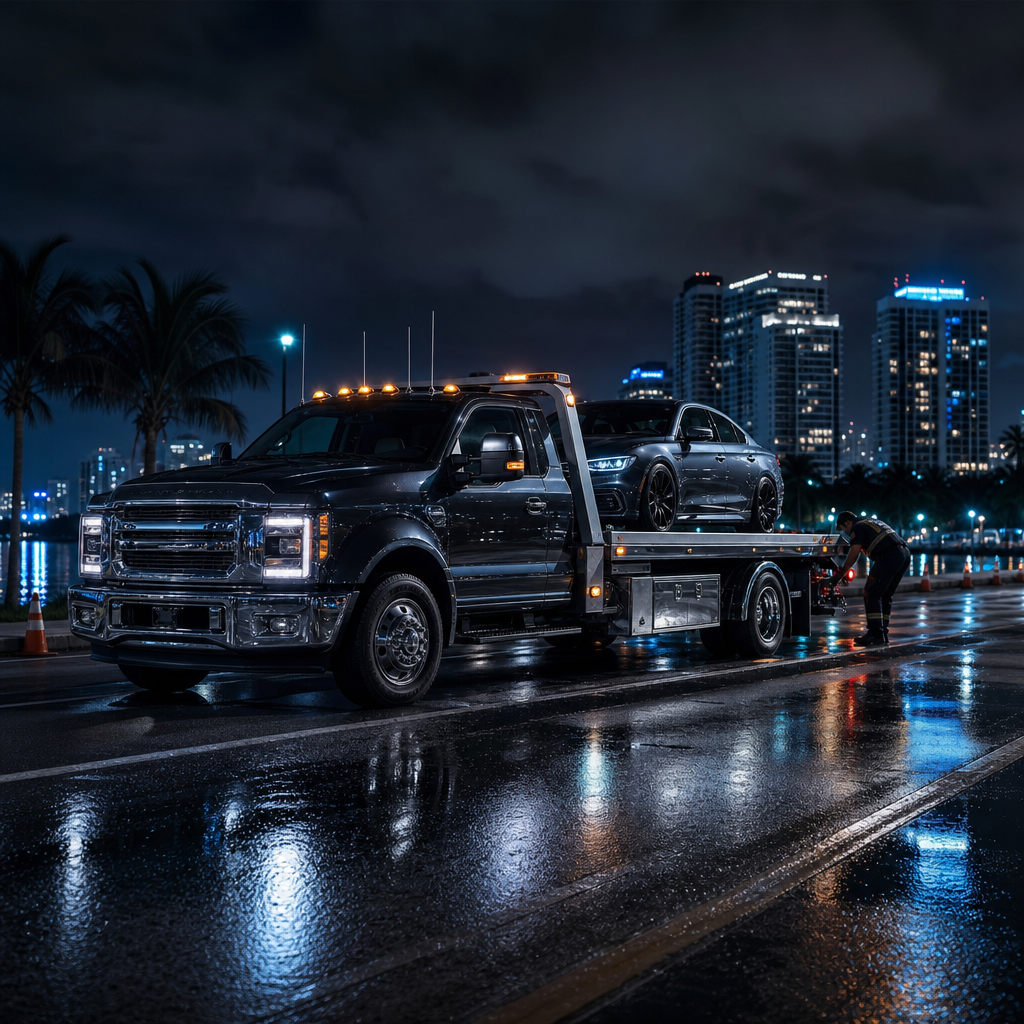
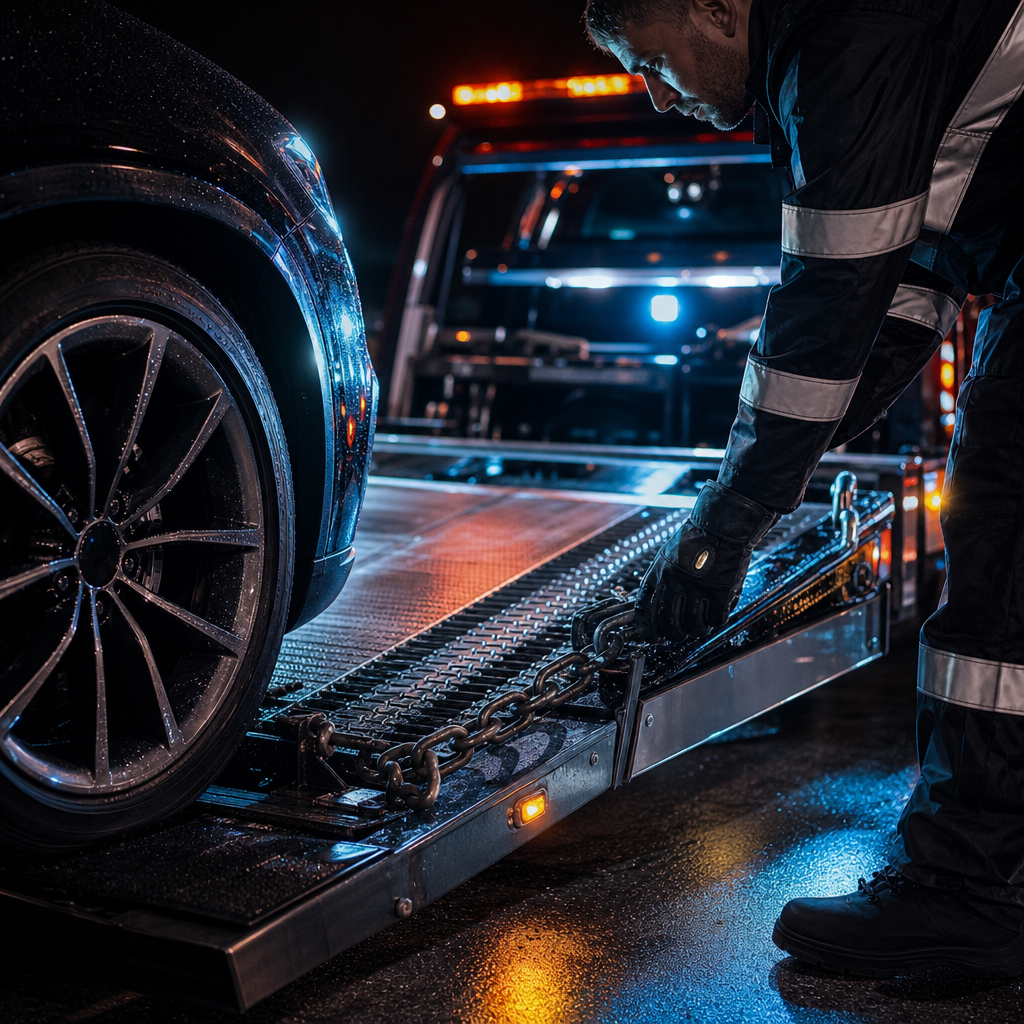
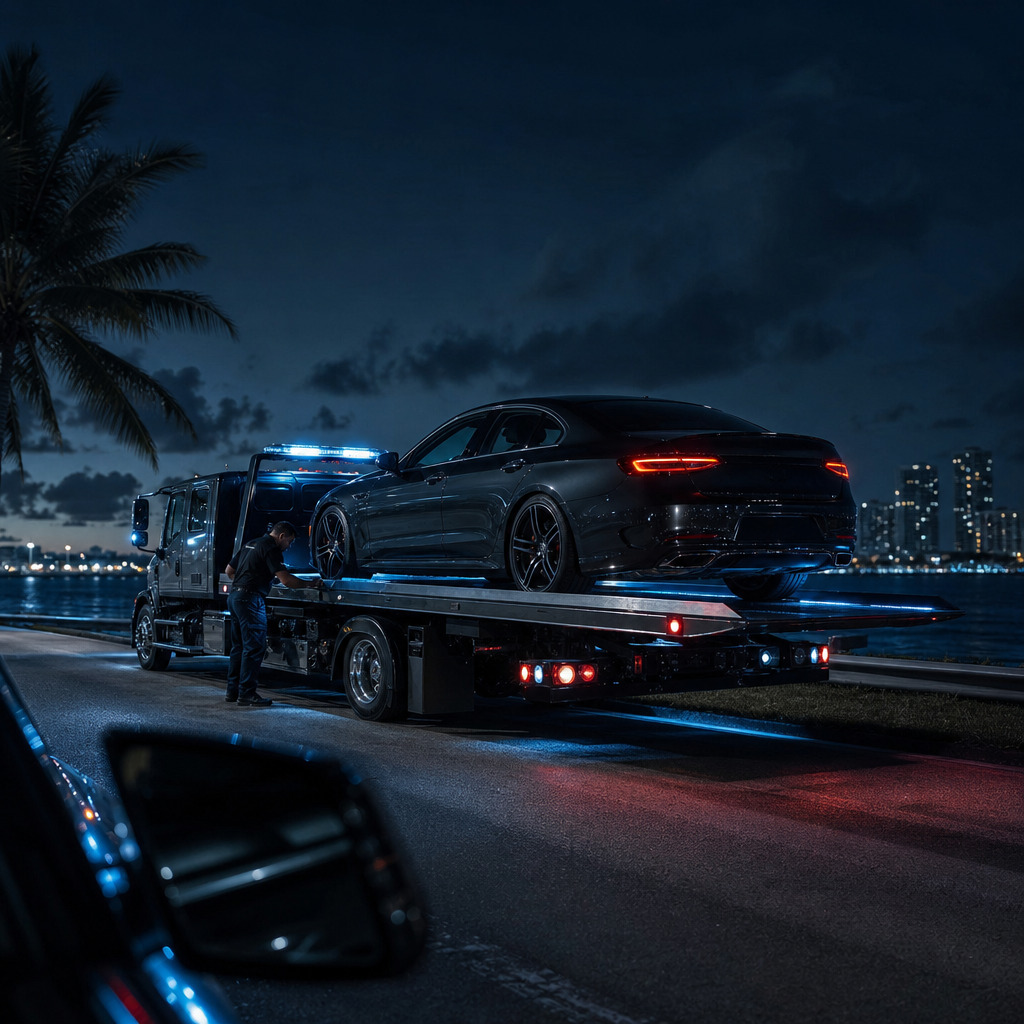
For an overheating condition, a flatbed is often the prudent option because it avoids asking the affected vehicle to run farther than necessary. Request flatbed towing when you need the vehicle carried rather than driven or pulled behind a tow truck.
Roadside heat checklist: protect people first, then the vehicle
- Do choose visibility. Stop where other drivers can see you, rather than around a blind curve, ramp, or tight entrance.
- Do use hazard flashers. They help signal that your vehicle is not moving normally.
- Do gather shade and water if safely available. Heat affects people as well as vehicles. Avoid waiting in direct sun when a safer shaded location is nearby.
- Do keep children, passengers, and pets away from traffic and away from the front of an overheated vehicle.
- Do watch for changing conditions. A vehicle that initially seems stable can begin leaking, smoking, or refusing to restart.
- Do not stand between your vehicle and traffic. Avoid leaning into the engine compartment or working near the roadway.
- Do not pour water onto a hot engine or attempt a roadside cooling-system repair. Sudden temperature changes and pressurized components can create hazards.
- Do not leave a disabled vehicle in gear, rolling, or positioned where it can obstruct others if a safer position is available.
Prepare for towing so the dispatcher can send the right help
A clear service request helps avoid delays and prevents the tow operator from arriving without the access information needed for your location. When you call emergency towing, have these details ready:
- Your exact location: Share the address, cross streets, parking area name, or a recognizable nearby business only if you can confirm it.
- Your vehicle details: Year, make, model, color, and license plate if available. Mention if it is not starting, overheating, has a flat tire, or cannot be shifted normally.
- The vehicle’s position: Say whether it is in a travel lane, parking space, driveway, shoulder, garage level, or loading area.
- Access limitations: If you are in a parking garage, tell the dispatcher the level, entrance route, height restriction signs, tight turns, gate access, and whether the vehicle can roll. Constrained access may affect the equipment that can safely reach you.
- Your safe contact method: Keep your phone charged if possible and answer calls from the service provider while you wait.
- Your destination: Provide the intended drop-off location before loading begins when possible.
Before the tow truck arrives, remove valuables you need, collect your keys, and have your identification available if requested. Do not stay inside the vehicle while it is being loaded. For help at any hour after a heat-related breakdown, use 24-hour towing and describe the symptoms plainly.
Quick answers for West Palm Beach drivers
Can I drive after the temperature gauge returns to normal?
Not automatically. A gauge that drops after you slow down or stop does not confirm that the underlying issue is resolved. If the vehicle overheated, showed a warning, or produced steam, arrange towing rather than resuming the trip.
Should I open the hood if my vehicle is overheating?
Do not open the radiator or coolant cap. If you can safely open the hood from inside the vehicle after stopping, do so only if it does not place you near traffic or expose you to steam. Keep your hands away from hot components and let the vehicle cool.
My tire-pressure light came on in the heat. Can I keep driving?
Reduce speed and stop at a safe location to assess the situation. If the tire is visibly low, damaged, vibrating, or affecting steering, do not continue driving. Call for roadside assistance or towing.
What should I tell a towing company about an overheated vehicle?
State that the vehicle overheated, whether there was steam or a warning light, whether it starts, and whether it can be moved or shifted. Also provide your exact location and any garage or access restrictions.
Choose the safer call
Heat-related trouble can change quickly, especially after a vehicle has been idling or sitting in the sun. If your vehicle is overheating, smoking, losing power, showing multiple warnings, or feels unsafe to control, stop driving and request help. A safety-first tow is a better choice than risking a more dangerous roadside stop later. Contact West Palm Beach 24-hour towing for assistance when your vehicle should not continue under its own power.